
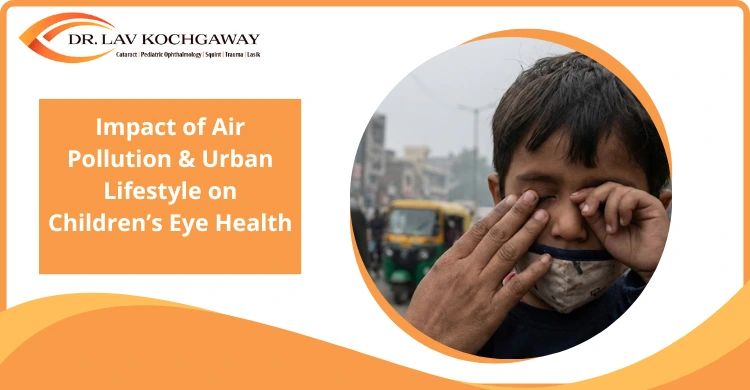
Every morning, children step out for school with backpacks on, and invisible pollutants in the air. In today’s urban cities, rising pollution levels and modern lifestyle habits are silently affecting children’s eyes. Paediatric clinics are reporting more cases of red eyes in children, constant watering, and eye irritation due to pollution than ever before.
Unlike adults, children’s eyes are still growing, adapting, and learning to see the world clearly. When air pollution combines with excessive screen time, reduced outdoor play, and poor indoor air quality, it creates a perfect storm for eye discomfort and long-term vision concerns.
Children don’t just experience the city differently, they absorb it more intensely. Their eye tissues are softer and more sensitive, making them less equipped to block harmful particles. Kids also breathe and blink faster, increasing exposure to pollutants.
Urban living means less time in green spaces and more time indoors on screens. Add weaker natural defences against allergens and pollution, and children’s eyes become easy targets for irritation, dryness, and inflammation.
Air pollution isn’t just a gas, it’s a cocktail of microscopic irritants that settle directly on the ocular surface.
Urban air is filled with irritants that directly impact eye comfort, including:
These pollutants disrupt the tear film that protects the eyes, leading to discomfort and inflammation.
Prolonged exposure can trigger several eye problems:
Often, what looks like a minor issue starts as simple eye irritation due to pollution.
When exposure continues, children may develop chronic eye inflammation, persistent vision strain, and a reluctance to play outdoors, impacting overall visual development and daily comfort.
While the air outside is a major factor, what happens inside the home is equally impactful.
Children may not always explain what feels wrong. Watch for:
These signs often signal pollution-related irritation rather than simple tiredness.
You cannot change the city’s air overnight, but you can create a “vision sanctuary” for your child.
Seek professional care if symptoms persist despite home measures, if redness becomes severe, if your child struggles to read or focus, experiences frequent headaches, or shows signs of myopia linked to excessive screen use.
Air pollution and urban lifestyles may be unavoidable, but their impact on children’s eyes doesn’t have to be permanent. With awareness, preventive habits, and timely eye care, parents can protect their child’s vision and comfort, ensuring they see the world clearly, confidently, and healthily.
Your child’s eyes deserve expert care in today’s polluted, screen-filled world. Dr. Lav Kochgaway provides gentle, specialised paediatric eye care to detect issues early, relieve discomfort, and protect long-term vision. Don’t wait for symptoms to worsen.
Schedule a consultation today and give your child the clarity, comfort, and eye health they deserve.
Repeated exposure to polluted air can cause chronic eye inflammation, dryness, and visual strain, potentially affecting comfort, focus, and healthy eye development over time.
Children with allergies, asthma, or sensitive immune systems often react more strongly to airborne pollutants, experiencing frequent redness, itching, watering, and recurring eye irritation.
Regular prescription glasses offer limited shielding, while wraparound or protective eyewear helps block dust, smog particles, and direct irritants from reaching the eyes.
Pollution irritation usually causes redness, watering, and itching without thick discharge, whereas infections often include pain, swelling, yellow discharge, and persistent discomfort.
Lubricating eye drops may provide temporary relief, but frequent or prolonged use without medical advice can mask underlying issues needing professional evaluation.