
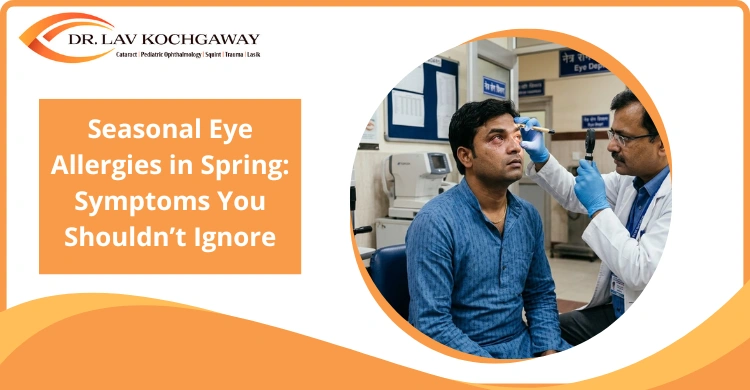
Spring brings longer days, blooming flowers, and fresh air, but for many people, it also marks the start of uncomfortable eye problems. Eye allergies in spring are one of the most common seasonal complaints, triggered by rising pollen levels, dust, and environmental changes.
What starts as mild itching or watering can quickly interfere with daily life. While most allergy-related symptoms are harmless, some seasonal eye allergy symptoms should never be ignored.
Understanding how spring allergies affect your eyes, and knowing when to seek care, can help you avoid unnecessary discomfort and protect your vision.
Seasonal eye allergies, medically known as allergic conjunctivitis, occur when the eyes react to airborne allergens. These allergens, such as pollen or mold spores, land on the eye’s surface and trigger the immune system.
In response, the body releases histamine, a chemical meant to protect you. Unfortunately, histamine also causes redness, itching, swelling, and excessive tearing. Unlike infections, allergic conjunctivitis is not contagious and typically affects both eyes.
The key difference between seasonal and year-round eye allergies lies in timing. Seasonal allergies appear during specific months, especially spring, while perennial allergies persist throughout the year due to indoor triggers like dust mites.
Spring creates the perfect storm for allergy flare-ups. Some of the most common triggers include:
Even brief exposure can cause noticeable symptoms, especially on windy or high-pollen days.
Seasonal eye allergies trigger a range of inflammatory responses in the eyes. These symptoms may vary in intensity, but they often follow a recognizable pattern:
1. Itching and Irritation: Itching is the hallmark of eye allergies and a leading cause of discomfort. Itchy eyes in spring often tempt people to rub their eyes, which can worsen inflammation and prolong symptoms.
2. Redness and Watery Eyes: When allergens irritate the eye surface, tear production increases to flush them out. Watery eyes allergy symptoms are frequently paired with redness, making the eyes appear tired or inflamed.
3. Swelling Around or on the Eyes: Allergic reactions may cause puffy eyelids or swelling of the conjunctiva (the clear tissue covering the white part of the eye), leading to a heavy or tight feeling.
4. Burning or Gritty Sensation: Some people experience a stinging, burning, or gritty sensation—like sand trapped in the eyes, especially after outdoor exposure.
Not all eye symptoms are typical of allergies. Seek medical attention if you notice:
Ignoring these signs can delay proper treatment.
Diagnosis begins with a detailed review of symptoms, including timing, triggers, and severity. An eye examination helps identify redness, swelling, or discharge and rule out infections or other eye conditions. Accurate diagnosis ensures appropriate treatment and prevents unnecessary medication use.
Treatment focuses on reducing symptoms and limiting allergen exposure:
Professional guidance is essential, as some eye drops are not meant for prolonged or unsupervised use.
Certain habits can worsen symptoms or slow recovery:
Simple preventive steps can make a noticeable difference:
Consult an eye specialist if:
Early care helps prevent complications and ensures faster relief.
Spring may be beautiful, but it can be tough on your eyes. While seasonal eye allergies are common, persistent discomfort isn’t something to live with. Paying attention to early symptoms, and acting when something feels off, can prevent bigger issues later. With the right care, timely guidance, and a few preventive steps, you can enjoy the season clearly, comfortably, and with confidence.
Treating eye allergies isn’t just about relief, it’s about protecting your vision. Dr. Lav Kochgaway explains what’s normal, what’s not, and how to prevent recurring flare-ups safely.
Schedule a thorough eye evaluation and approach allergy care with confidence.
Seasonal eye allergies usually last several weeks to months, depending on pollen levels, weather conditions, and individual sensitivity to environmental allergens.
Eye allergies may cause temporary blurred vision due to excessive tearing or inflammation, but persistent vision changes require prompt medical evaluation.
Spring eye allergies result from immune reactions to allergens, not infections, and therefore do not spread from person to person.
Lubricating eye drops can relieve mild symptoms, but frequent or medicated drop use without guidance may worsen irritation or mask underlying eye conditions.
Medical evaluation is recommended if symptoms persist, worsen, affect vision, cause pain, or do not improve with basic allergy care.